

Blogs
Follow Sinoma Energy Saving to learn about the latest information of the company
Walk into the UK's zero-carbon cottage to experience cutting-edge architectural achievements.
Release date:
2021-06-28
Author:
Source:
Hubei wall material
"Good wall insulation design, minimized hot and cold bridges, full heat recovery fresh air system and one-way breathable dehumidifying walls that ensure high air tightness reduce the building's energy consumption requirements by 75% relative to traditional houses. It can be said that the cabin has reached its own carbon peak while it is completed, and is expected to reach carbon neutrality in 2047." At the China Architectural Science Conference and Green Smart Building Expo (GIB), which opened on June 24, the reporter saw that the zero-carbon hut designed by the British company Zero Carbon Workplace (Zed Factory) was exquisite in appearance and novel in concept, which attracted many exhibitors. The audience stopped and walked up the stairs to find out, and while listening carefully to the staff's explanation, they experienced the new form of future architecture.
"Good wall insulation design, minimized hot and cold bridges, full heat recovery fresh air system and one-way breathable dehumidifying walls that ensure high air tightness reduce the building's energy consumption requirements by 75% relative to traditional houses. It can be said that the cabin has reached its own carbon peak while it is completed, and is expected to reach carbon neutrality in 2047." At the China Architectural Science Conference and Green Smart Building Expo (GIB), which opened on June 24, the reporter saw that the zero-carbon hut designed by the British company Zero Carbon Workplace (Zed Factory) was exquisite in appearance and novel in concept, which attracted many exhibitors. The audience stopped and walked up the stairs to find out, and while listening carefully to the staff's explanation, they experienced the new form of future architecture.
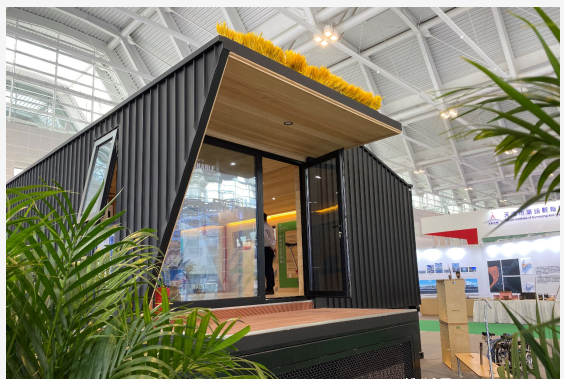
What is a zero-carbon building? With doubt, the reporter learned from the relevant experts present that the relevant definition of the World Green Building Council is: a highly efficient and energy-saving building that can achieve no external energy consumption and no carbon emissions every year. From the advanced experience of developed countries, the British government announced in December 2006 that all new buildings funded by the government should meet the zero carbon emission standard in 2016. In 2007, the UK Renewable Energy Recommendation Committee submitted a report to the British Renewable Energy Society, and further proposed that a true "zero-carbon residential building" (Zero-Carbon Home) should not require grid input energy and do not emit carbon dioxide to the atmosphere. Its heating needs should be minimized through building design and met by renewable fuels and technologies. Its electricity needs should also be minimized and met by renewable energy generation.
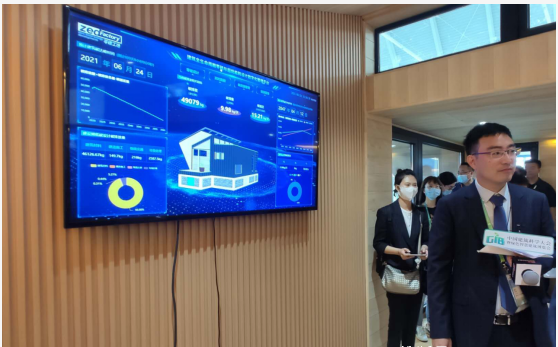
According to data from relevant international agencies, the carbon emissions of the construction industry have accounted for 40% of the total global carbon emissions. This also means that efforts to reduce carbon emissions in the construction sector are crucial. As a leader in the field of zero-carbon design and development, Gao Wei, general manager of zero-carbon factory (Beijing) design consulting co., ltd. in China, showed the visitors advanced solutions and application cases in this field in the zero-carbon house: the surface of the house is covered with building integrated solar panels to generate electricity, heat, cool, and provide hot water and lighting to provide energy power for users. If mobile homes are stacked to maximize exposure to the sun, the main power consumption can be greatly reduced, so that the annual net energy bill is almost zero. In an ideal state, the design scheme can completely cover the energy consumption of the building, and the excess electricity can be used for other electrical appliances or stored in the hot water tank. Through the details of the carbon emissions of various materials, the company has formed a set of professional data and simulation system, which can accurately predict the overall feasibility of the project and the time of carbon peak and carbon neutrality after completion at the initial stage of design.
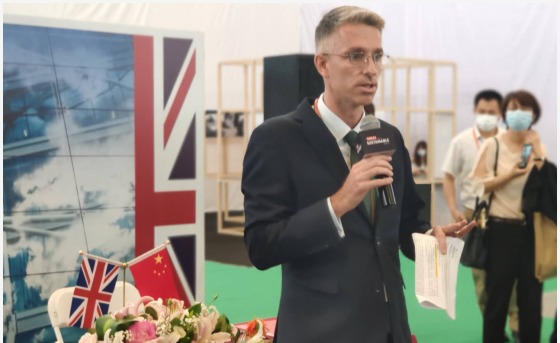
How to integrate the concept of zero carbon into architectural design? In the face of the reporter's question, Gao Wei said: "first of all, the building is built for people, to consider the needs of human settlements and building purposes, the existence of the building should fully consider the local topography, landform, nature, climate, light, the design is integrated into it, and in the design process, as far as possible to find the use of clean energy, such as solar energy, wind energy, hydropower, to assist the energy needs of the whole building. At the same time, the choice of building materials should consider the economy and applicability. No matter what the project is, it is impossible to simply pile up the most advanced technology to add up the cost. Instead, we should make more use of clean energy and natural energy to assist in the design and future buildings, taking full account of the comfort of human settlements. If from this point of view, in fact, there are not many affordable new materials can be applied to the building monomer. Then, the solution that will be used is to use the design method, or to rearrange the combination of materials and materials to make it play the most effective. For example, if you want the house itself to have better heat preservation and cold prevention, you can consider the house itself to have better ventilation in the design. The laying of solar photovoltaic panels in buildings requires a certain oblique angle to achieve better energy conversion rate. On the choice of inverter (power conversion device), how many households can be built to achieve the best effect of energy storage, etc. Therefore, under the premise that the economic cost will not increase greatly, the architectural design should choose more sustainable and recyclable building materials, so that the building itself can reduce the demand for natural energy, or do not use fossil energy at all. This is the biggest contribution of building to reduce carbon emissions."
It is understood that the British Zero Carbon Construction Office was established in 1999 and is the world's first architectural designer firm with zero carbon emissions as the core. From the overall planning of a large-scale "eco-city" to the design of a single building, the zero-carbon plant is committed to undertaking the architectural design and planning of net zero carbon dioxide emissions throughout the life cycle, and develops or upgrades various building components and products around the zero-carbon building and planning, such as integrated photovoltaic roof systems, passive heat exchange hood systems, sponge rainwater recovery structure systems, etc. The company is headquartered in Beddington, London, UK-the world's first full-fledged eco-village and one of the UK's largest zero-carbon eco-communities and largest zero-energy development projects.
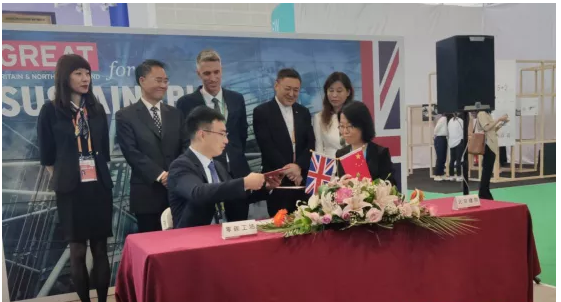
Tom Duke, Deputy Trade Envoy for International Trade at the British Embassy in China, said: "Both the British and Chinese governments regard the promotion of green buildings as an important part of our efforts to achieve net zero emissions. In this field, there are many complementarities and opportunities for cooperation between the two countries. China is one of the important markets for British built environment companies. The expertise of British companies in green standards and training, architectural and engineering design, project management and property management can provide a series of services for Chinese companies." Witnessed by the British International Trade Department of the British Embassy in China and other relevant leaders, Zero Carbon Works signed a strategic cooperation memorandum with Beijing Architectural Design and Research Institute, laying a good foundation for the further promotion of sustainable building development programs in China.
Keywords:
Latest Updates

Contact Information
Phone:400-906-6996 (Contact Number)
Phone:86-13545719507 (Mr. Shao)
Email:baifeng@sinoma-ec.cnlijie@sinoma-ec.cn

WeChat Official Account

WeChat Video Channels

Official TikTok

Product Color Chart